
Baseline
Observe representative operating conditions.
GoSense MachineGuard
Structure runtime, temperature, and vibration evidence around motors, pumps, compressors, generators, and other rotating equipment.
Trend and anomaly monitoring is designed to support earlier inspection. It is not a guaranteed failure prediction.
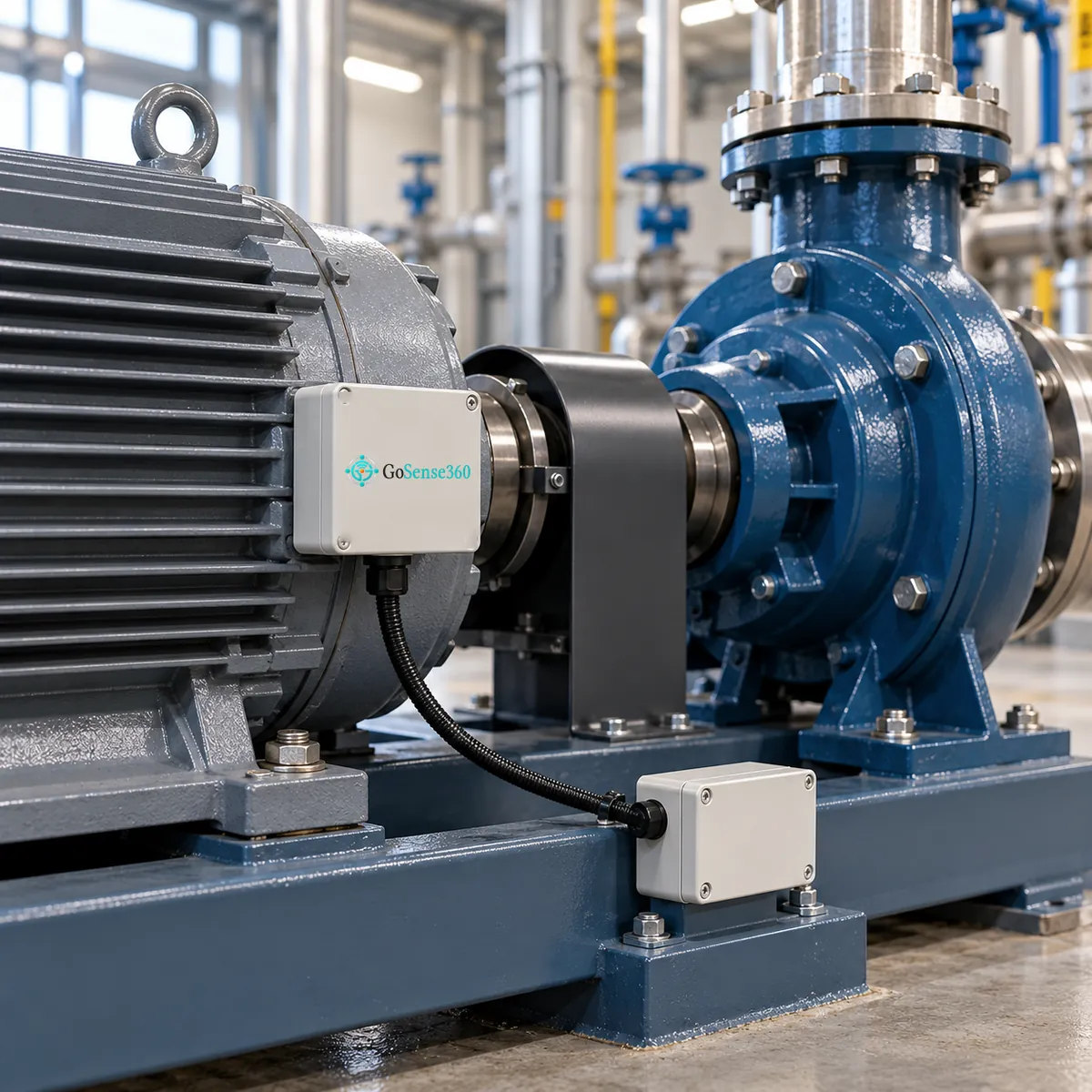
Three monitoring levels
The levels are technically distinct. High-frequency analysis is not presented as a default feature of basic sensing.
| Level | Typical signals | Use | Boundary |
|---|---|---|---|
| Basic condition monitoring | Runtime, selected temperature, overall low-rate vibration where suitable | Operating visibility and trend review | Final sensor and sampling depend on the asset and installation |
| Industrial 4–20mA sensing | Approved industrial transmitters and process inputs | Robust signal integration over suitable industrial wiring | Requires signal, power, isolation, scaling, enclosure, and safety design |
| High-frequency vibration / FFT pilot | Higher-rate waveform acquisition and frequency-domain analysis | Bounded diagnostic or anomaly study | Pilot only: asset classes, mounting, sampling, labels, baseline, and acceptance criteria must be validated |
Asset coverage
A useful condition-monitoring scope begins with the asset, operating regime, current maintenance practice, and decision the team is prepared to make.
Inspection workflow
Thresholds, recipients, escalation, and maintenance integration are defined with the site team.
Observe representative operating conditions.
Track approved condition signals over time.
Relate load, runtime, and service activity.
Show configured deviation or anomaly.
Use qualified human inspection.
Record findings for the next review.
FAQ
Not as a general promise. It shows condition trends so teams can inspect earlier. A predictive-maintenance pilot needs suitable history, validated sensing and an agreed way to evaluate it.
Most sites start with basic condition monitoring on a few critical assets, then decide from the trends whether industrial sensing or a vibration pilot is justified.
Motors, pumps, compressors, fans, gearboxes and generators where a change in temperature, runtime or vibration would lead to an inspection decision.
Your maintenance team. An anomaly is a prompt to inspect, not a confirmed diagnosis.
MachineGuard discovery