Plant readings
Bring approved treatment-process measurements into the operating timeline.
Dyehouse & Utilities
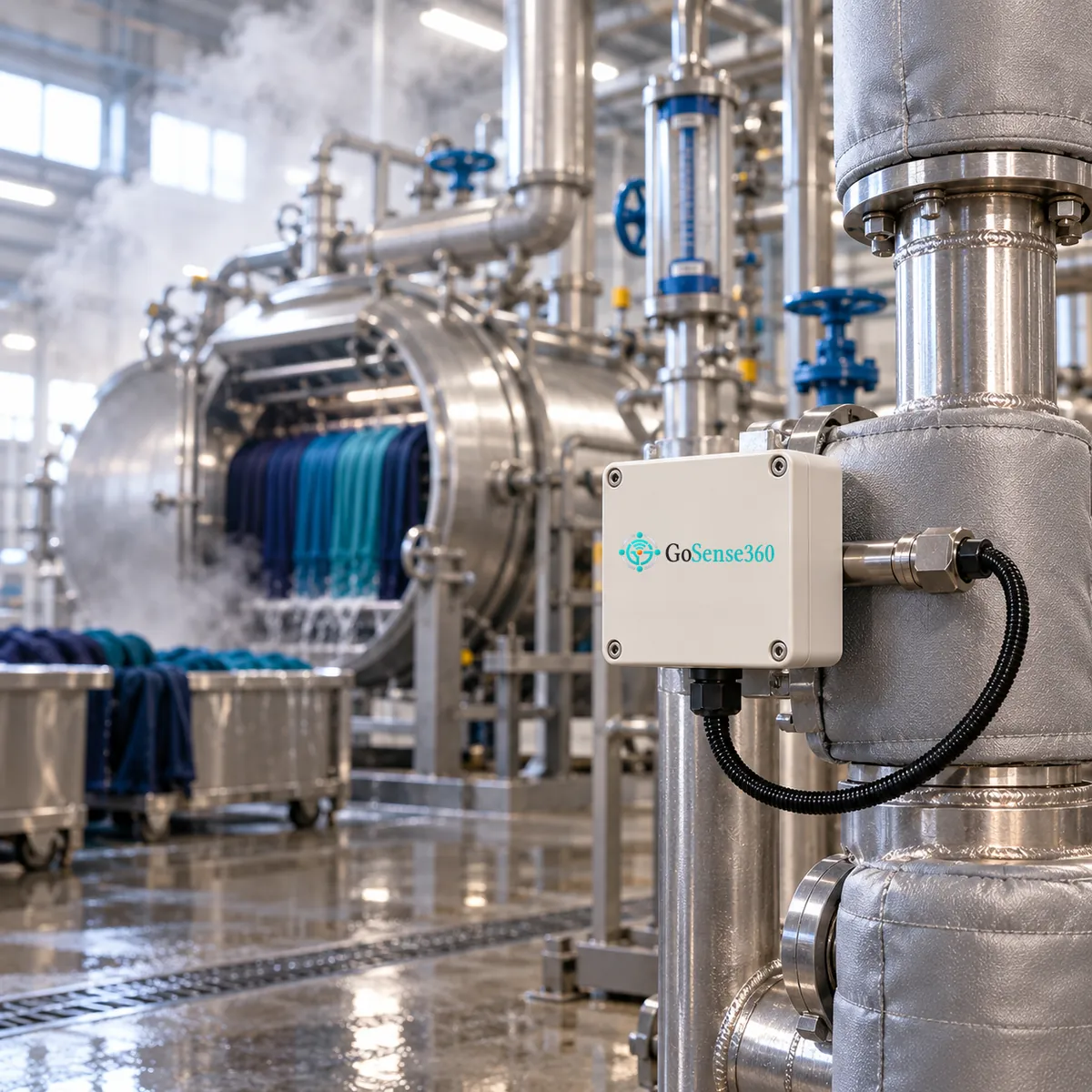
Bring approved dyehouse signals, chemical-batch context, electricity and water use, asset condition, and effluent records into a structured operating review.
Dyehouse & chemicals
Every measurement depends on the selected industrial instrument, installation, calibration, sampling, and integration design.
| Operating context | Potential observed signal | Review use |
|---|---|---|
| Recipe & batch | Approved recipe reference, chemical batch, machine, order, and run | Establish the comparison context |
| Bath conditions | Temperature, pH, conductivity, and flow where supported | Compare the operating curve with approved limits |
| Deviation | Duration, magnitude, sequence, and related events | Highlight evidence for a qualified process review |
| Outcome | Inspection, corrective action, notes, and disposition | Preserve the reviewed operating record |
GoSense360 can help compare operating curves and highlight deviations. It does not automatically certify product quality or replace approved laboratory and quality-control procedures.
Utilities & assets
When metering, machine identity, and order data are available and aligned, teams can review resource intensity at a more useful operational level.
Effluent & evidence
Treatment-plant readings, laboratory results, corrective actions, and incident history can be organized for audit and operational review.
Bring approved treatment-process measurements into the operating timeline.
Reference the responsible laboratory result and sampling context without treating a field signal as a substitute.
Record owner, review, action, status, and supporting evidence through the agreed workflow.
Assemble an evidence-backed chronology for internal review or audit preparation.
FAQ
No. Field measurements sit beside laboratory results in the same timeline; they do not replace laboratory validation or regulatory assessment.
Where metering and production records line up. The allocation method is documented so the figure can be checked.
No. It shows how a run compared with the approved recipe and limits. Quality approval stays with your quality team.
Temperature, pH, conductivity and flow are the usual starting points. Instrument choice and installation are confirmed after a technical survey.
Dyehouse discovery