Factory Operations

See the factory as one connected operation.

Structure production, quality, dyehouse conditions, utilities, assets, workforce presence, and evidence around the same operating context—then scope automation where it is useful and controlled.

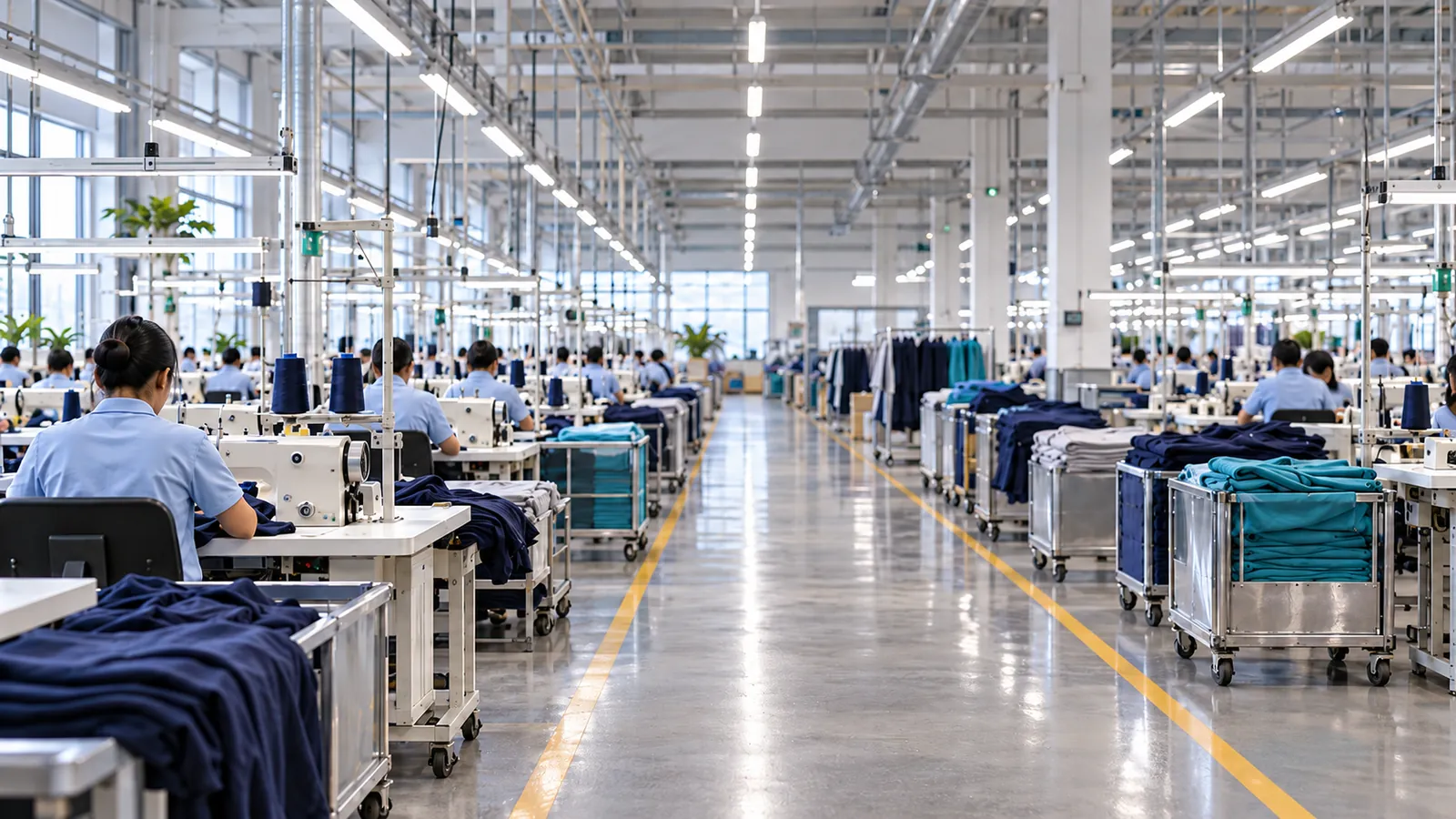
Garment factory floor with rows of sewing lines and fabric trolleys along a central aisle
Illustrative image
One contextEquipment, process, order, and asset references.
Clear ownershipThe responsible system remains the source of truth.
Controlled assistanceRules and AI support review; they do not certify outcomes.

Five operating domains

Scope the real flow of work.

The items below describe the customer-facing operating scope. Availability, data sources, device support, and workflow depth are confirmed during discovery.

01 · Output

Production & Quality

Quantities per stage, waste, machine downtime, in-process inspections, and pre-shipment inspection records.

  • Analytics: recurring defect stages and defect-trend summaries.
  • AI pilot: image inspection only after representative images, controlled validation, and a human acceptance standard.
02 · Resources

Utilities & Assets

Electricity and water per machine or line, asset faults, maintenance history, runtime, and condition monitoring.

  • Analytics: consumption per piece or order and inspection prioritization.
  • Pilot boundary: vibration anomaly analysis stays within proven sensor, mounting, sampling, and asset boundaries.
03 · Process

Dyehouse & Chemicals

Operating recipe, chemical batch, bath temperature, pH, conductivity, and flow, subject to approved sensing and integration.

  • Analytics: compare operating curves with the approved specification and highlight deviation.
  • Boundary: no automatic quality certification is claimed.
04 · Evidence

Effluent & Evidence

Treatment-plant readings, laboratory results, corrective-action register, and incident history.

  • Analytics: evidence-backed event summaries and a review timeline.
  • Boundary: supports audit-ready records; it does not provide legal or environmental compliance certification.
05 · Presence

Workforce Presence

Fixed Bluetooth readers at the site or line detect each employee’s Bluetooth device, and phone location follows presence through the shift. Both are related to the shift plan and line allocation.

  • Analytics: arrival, departure and time on each line, with coverage gaps by line and shift.
  • AI pilot: labor-gap forecasting, using approved source data and human review.
  • Boundary: presence is followed continuously during working hours. What is recorded, where, and who can see it is agreed with the employer and disclosed to employees before it starts. Leave, overtime and payroll are handled in the Workforce, HR & Payroll module.

Business modules

Add the modules your factory needs.

Optional GoSense360 modules run on the same operating records as monitoring, so a reading, a work order and a maintenance task refer to the same asset. Use them alongside your current systems or in place of them.

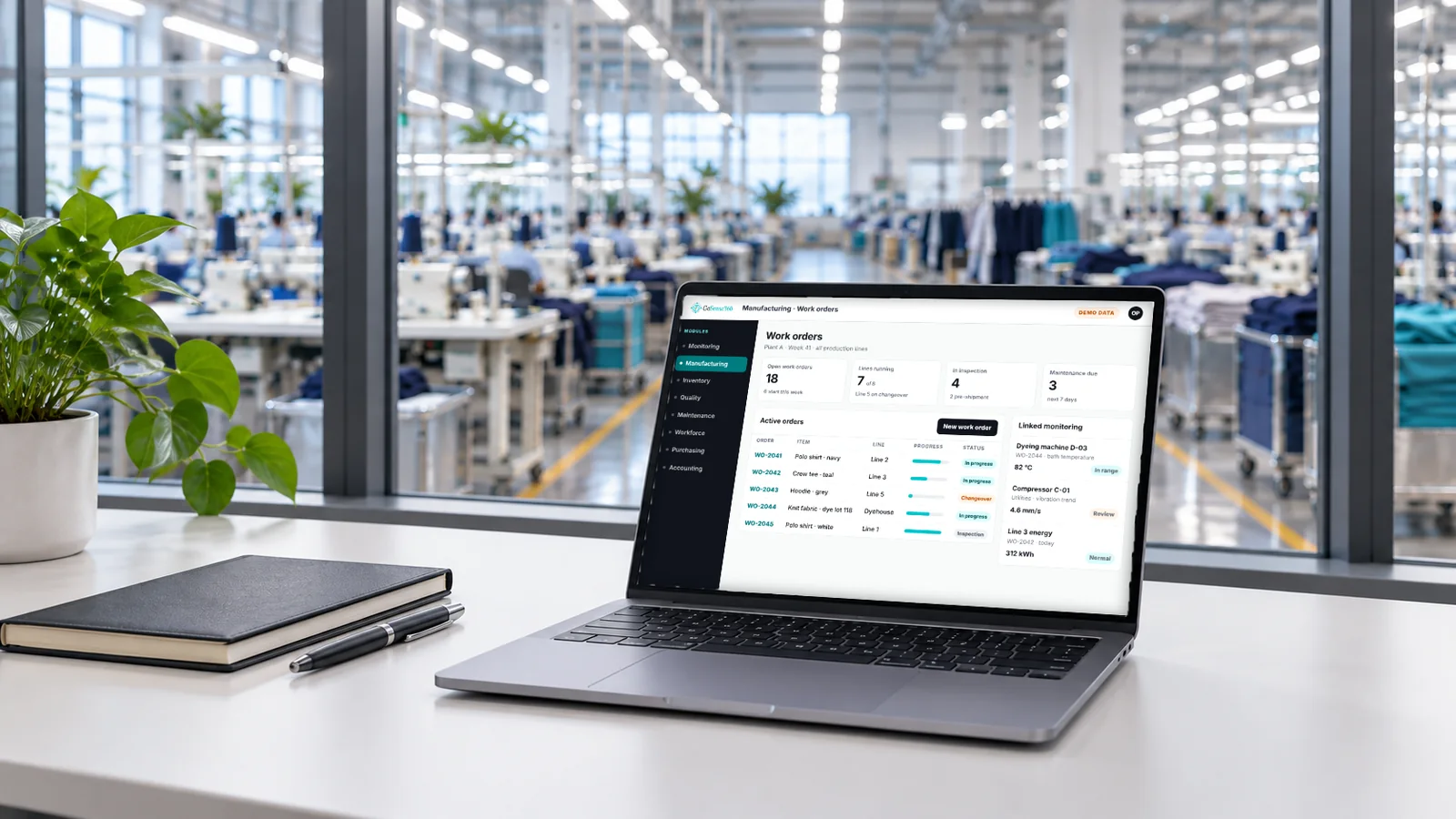
Laptop in a factory office showing a work orders screen with linked monitoring readings
Illustrative interface with demo data

Manufacturing

Bills of materials, routings, work orders, job cards and production planning.

Inventory & Warehousing

Stock, batches, serial numbers, transfers and warehouse locations.

Purchasing & Suppliers

Material requests, purchase orders, supplier records and receipts.

Sales & Order Management

Customer orders, delivery schedules, dispatch and invoicing hand-off.

Quality Management

Inspection plans, in-process and final checks, non-conformance and corrective actions.

Maintenance & Assets

Asset register, preventive schedules, breakdown records and spare parts.

Workforce, HR & Payroll

Employees, attendance records, shift plans and line allocation, leave, overtime and payroll preparation.

Accounting & Costing

Ledgers, cost centres, production costing and financial reporting.

Brand Orders & Delivery

Projects per order, model or season with deadlines and milestones, work orders, job cards and execution status, plus capacity and delay-risk views for a planner to review.

Modules, localisation, data migration and support are agreed in the proposal. Already running an ERP? Review integration options

Operating model

Connect facts without collapsing responsibilities.

Signals, ERP records, approvals, and evidence each keep a clear owner.

Observe

Capture the event or operating signal.

Validate

Check identity, quality, sequence, and time.

Relate

Attach line, order, asset, batch, or shift context.

Review

Present deviation and supporting evidence.

Approve

Keep human authority for controlled actions.

Record

Preserve the outcome in its responsible system.

Maturity boundary

Analytics now. Automation by agreement. AI by pilot.

The proposal names the data sources, acceptance tests, responsible owner, fallback, and review process for every advanced capability.

A

Available / Evidenced

Platform foundations proven by current contracts and tests.

  • Validated ingestion
  • Accepted history
  • Recent state
  • Tenant scope
  • Recovery path
W

Workflow Automation

Rules, alerts, and ERP actions after workflow definition and approval.

  • Threshold workflows
  • Quality holds for review
  • Corrective-action routing
P

AI Pilot

Representative data, bounded evaluation, and human acceptance required.

  • Labor forecasting
  • Delay prediction
  • Visual inspection
  • Predictive maintenance

Factory discovery

Start with one operating question, then expand on evidence.

Pick the records and measurements that question needs and the team responsible for accepting the result.

Discuss factory operations